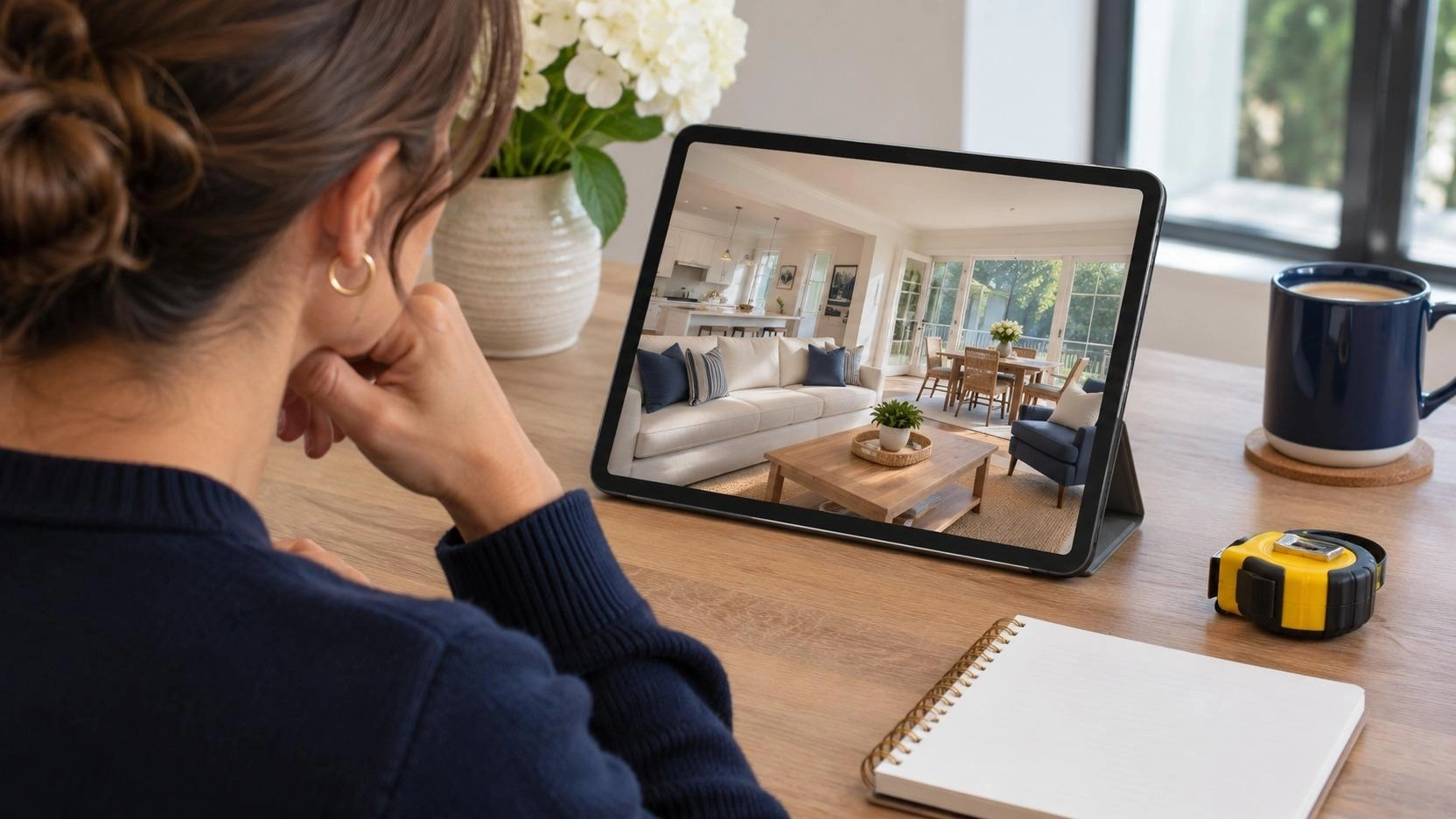
A video tour can help you decide whether a home deserves closer attention, but it can also create a misleading sense of familiarity. You may recognize every room on screen while still misunderstanding the distance between them, the route from parking, or the way the property feels during an ordinary day. Remote home shopping works best when the tour is treated as a structured information-gathering session.
For a Newport Beach search, that means agreeing on what you need to see and what the camera cannot establish. A thoughtful process can make a short visit more productive and reduce unnecessary travel. It should also make the remaining questions obvious, especially before you make decisions that depend on condition, legal rights, or financing.
Decide what the remote tour needs to accomplish
Before scheduling, identify the decision you expect to make afterward. Are you deciding whether to visit, whether to request more records, or whether the layout meets a basic need? A clear purpose prevents a long video call from producing only a vague impression that the home looks pleasant.
Write down the features you cannot compromise on and explain why they matter. A ground-level room, a workable entry route, or separation between work and sleeping areas may deserve more attention than decorative finishes. Your agent can show the relevant spaces more effectively when the underlying need is understood.
Avoid expecting the first call to answer everything. A remote tour can help narrow a search while leaving technical, legal, and personal-experience questions for other methods. The quality of the process depends on matching each question to a reliable source of information.
Prepare a route rather than a list of favorite photographs
Ask for a continuous orientation through the property where access permits. Begin at the normal entrance and move through the rooms in order. This helps you understand connections that edited listing photographs may not show.
Include ordinary routes such as carrying groceries from parking, reaching laundry facilities, or moving between a bedroom and a bathroom. If a route includes shared space, ask what rights and responsibilities apply and where those are documented. The camera shows a physical path, not necessarily a legal right to use it.
For a Newport Center condo, the route from parking or an elevator may be important. For a Balboa Peninsula property, the relationship between indoor space and outdoor access may deserve attention. Use the actual home’s layout rather than a generalized picture of the neighborhood.
Ask for pauses at transitions
A slow turn at a doorway can be more informative than a sweeping view of a furnished room. Ask the person filming to pause and explain where they are standing. Repeated reference points help you understand the plan without asking them to recreate the entire tour later.
Use measurements to answer specific questions
If a dimension matters, explain what you are trying to fit or use. A desk, bed, or mobility-related requirement may call for a more precise measurement than an approximate room size. Ask who can provide reliable measurements and what level of verification is appropriate.
Do not treat a phone camera’s perspective as a measuring tool. Wide angles can change the apparent relationship between furniture and walls. A listing floor plan may be helpful, but its stated dimensions and limitations should still be reviewed.
For a consequential accessibility or alteration question, consult an appropriate professional. A remote demonstration may identify a concern without establishing that the property meets an individual’s needs. Keep observation, measurement, and professional assessment separate in your notes.
Request ordinary views as well as attractive ones
Marketing images understandably emphasize a home’s appealing features. During a live tour, ask to see the parts of everyday use that are less likely to appear in those photographs. These may include storage, transitions between rooms, and the relationship of windows to adjacent structures.
Ask about what cannot be shown. An occupied room, locked storage area, or restricted shared space may need another visit or a records inquiry. Do not let an unavailable view become an assumed positive finding simply because the rest of the property looks good.
Keep requests respectful and within authorized access. The tour should not involve entering neighboring property, opening private belongings, or bypassing safety restrictions. If a question cannot be answered appropriately during the appointment, record it for a different process.
Treat sound and light as incomplete evidence
A video call can offer useful impressions of light and activity, but the microphone and camera affect what you experience. Ask about the time of day and conditions during the visit. If a particular concern matters, consider how to evaluate it through additional observation.
Do not assume a quiet moment represents every hour or that a bright camera image reflects how a room will feel to you. A second visit at a relevant time may help, subject to permission and availability. Your own in-person experience remains valuable for questions involving comfort and routine.
For a buyer comparing Corona del Mar and Newport Heights properties, focus on the individual homes and nearby conditions you can lawfully observe. Broad neighborhood descriptions cannot tell you how a particular bedroom or work area will function for your household.
Keep condition review with qualified professionals
A remote tour is not a substitute for a home inspection. Ask the appropriate professionals to evaluate systems, structure, and other material condition questions within a defined scope. The California Department of Real Estate advises buyers to obtain professional inspections rather than rely on limited personal observation.
If something visible raises a concern, describe it neutrally and request qualified follow-up. Do not ask the person filming to diagnose it, test unfamiliar equipment, or enter an unsafe area. A stain, crack, or unusual sound is a reason for a question, not a complete technical conclusion.
Michelle Wade’s buyer’s guide separates touring from later transaction steps. Use the remote visit to identify what deserves investigation while preserving the role of inspections, disclosures, and other due diligence.
Combine the video with a document review
Request the relevant information available for the stage of the search. Ask your agent which records can help answer questions that the tour cannot resolve. Depending on the property, these may concern association rules, permits, included items, or prior work.
Compare each important claim with its source. A seller’s description of a room as usable for a particular purpose may need clarification through records or qualified advice. A picture of an outdoor feature does not establish ownership, approval, or maintenance responsibility.
Use a short question log rather than collecting documents without a plan. Identify the question, the source expected to answer it, and the current status. This makes it easier to see whether you are waiting for a fact, a professional interpretation, or your own decision.
Create a consistent comparison after each tour
Immediately after the call, write a brief assessment while the layout is still clear. Describe what appears to work, what does not, and what remains unknown. Avoid converting “not shown” into “not a problem.”
Use the same criteria across homes, but allow room for meaningful differences. A property with fewer rooms may use its space more effectively for your needs. Another may offer a preferred setting while requiring more ownership work. The aim is an informed comparison, not a score that hides important tradeoffs.
Imagine a hypothetical buyer choosing between two Newport Beach homes from another state. One has more attractive photographs, while the other has a clearer layout and fewer unresolved practical questions. A written comparison helps the buyer identify which property deserves an in-person visit and what that visit should resolve.
Keep opinions separate from facts
Your agent can describe what they observe, and you can record your own preferences. Label each appropriately. “I liked the room on video” and “the measured opening is wide enough for the item” are different kinds of information. Both can matter, but they should not be confused.
Plan the in-person visit around unanswered questions
If travel is possible, use the earlier work to make the visit purposeful. Revisit the routes and spaces that were difficult to understand remotely. Spend time on the needs that depend on your own experience, such as how the layout supports your routine.
Coordinate any specialist appointments separately and confirm access. A busy travel itinerary should not force you to compress professional investigations into an informal showing. Ask what can realistically be completed and what may require another step.
If you cannot attend before making a decision, discuss the additional uncertainty openly with your agent and appropriate advisers. The actual agreement determines your obligations and options. Do not assume that being out of town creates an automatic extension or special right to reconsider.
Establish a dependable communication routine
Agree on how updates and documents will be delivered, especially if you are working across time zones. Identify the contact for urgent transaction matters and the method for confirming important decisions. A predictable routine can be more useful than a stream of messages scattered across platforms.
Protect sensitive documents and payment instructions. The CFPB warns about criminals impersonating real estate or settlement professionals near closing. Verify payment details using an independently established trusted contact method, particularly when an unexpected message changes earlier instructions.
Michelle’s client-focused approach emphasizes clear communication without pressure. In a remote search, that means explaining what is known and what still needs work so you can make decisions with an accurate view of the evidence.
Make a useful request when the connection fails
If video quality drops, ask for a short additional recording of the specific area that was missed, with the seller’s permission where required. Describe the question it needs to answer: the connection between rooms, the position of a doorway, or the available wall space. A targeted request is often more informative than repeating an entire tour with the same connection problem.
Label the recording with the property and visit date in your own notes. Keep it with the related measurements and unanswered questions so images from different homes do not become mixed together during comparison.
Use technology to support a considered purchase
Remote home tours are most valuable when they make the next step clearer. They can help eliminate unsuitable layouts, identify worthwhile visits, and prepare better questions for professionals. They should not create false certainty about matters that require records, specialist evaluation, or personal experience.
A successful Newport Beach remote search ends with a home you understand well enough to evaluate responsibly. The camera is one part of that understanding. Your priorities, verified information, and willingness to investigate the remaining questions are what turn a convenient tour into a useful purchase decision.
FAQs
Can a video tour replace a home inspection?
No. Arrange qualified inspections for material condition questions and understand the scope and limitations of each evaluation.
Should I rely on listing photos for room dimensions?
No. Obtain appropriate measurements and verification when a dimension affects your decision.
What if I cannot visit before making an offer?
Discuss the uncertainty, due diligence plan, and actual contract terms with your agent and qualified advisers before committing.
Contact Michelle Wade
Searching for a Newport Beach home from out of town? Contact Michelle Wade at 949-633-4400 to plan useful tours and a clear process for the questions that follow.