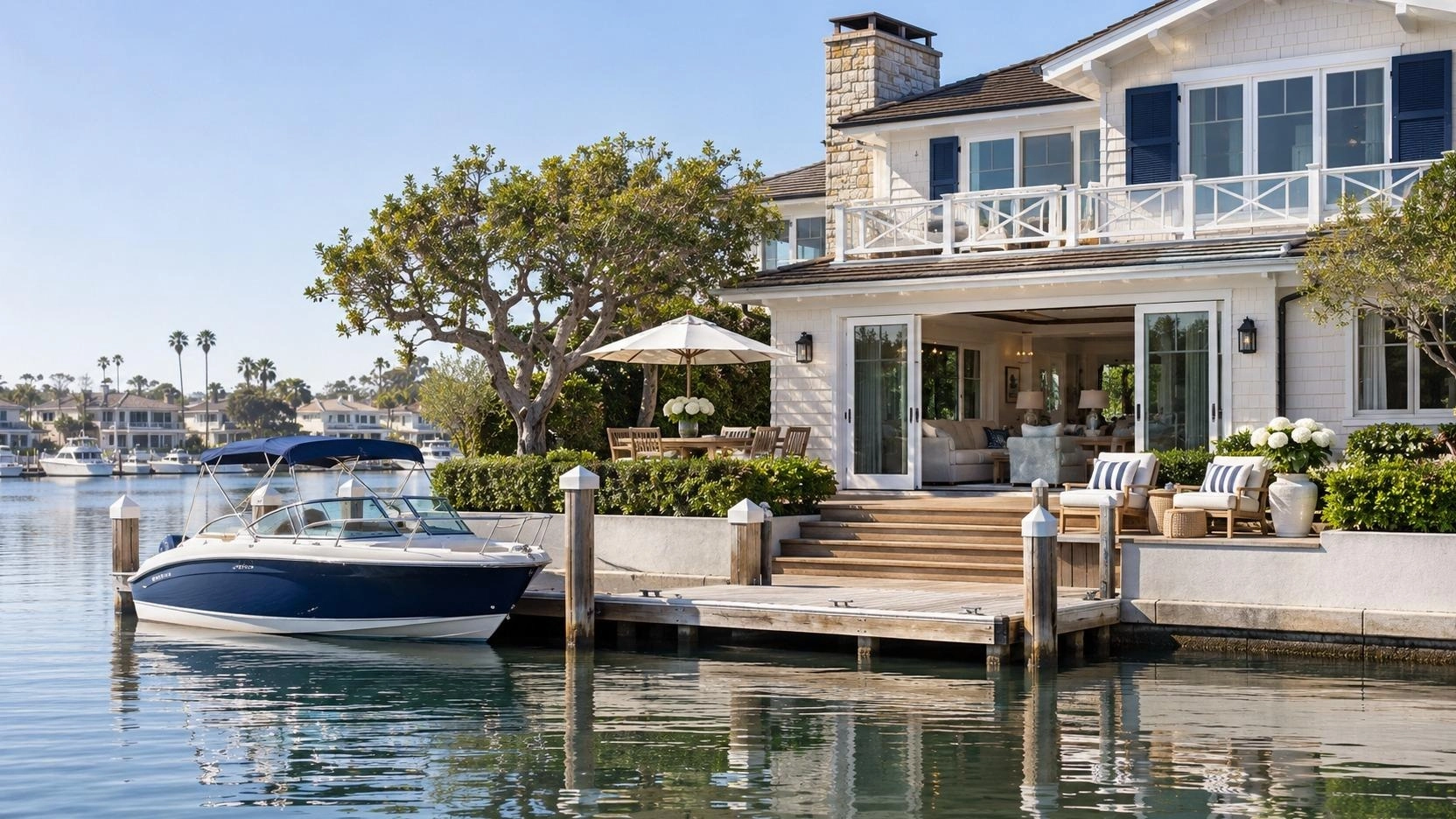
A dock can be the feature that makes a waterfront property feel like the right home. It may suggest early departures on the harbor, easier access to a boat, or evenings beside the water. Before relying on that picture, find out exactly what the property includes and what is required to use and maintain the waterfront improvements.
Buying a Newport Beach waterfront home with a private dock involves more than confirming that a dock appears in the listing photographs. The ownership records, permit conditions, physical condition, and intended boating use need to fit together. A careful review helps you understand whether the feature that attracts you will function as expected after the purchase.
Identify the specific arrangement being offered
Ask the seller and your agent to explain what is included in the transaction. Is the listing referring to a pier and float associated with the home, an interest in a shared structure, or access through another arrangement? Request the supporting records rather than relying on a convenient marketing label.
A private dock, a marina slip, and a mooring are not interchangeable descriptions. Newport Beach publishes separate information about dock and pier permits and mooring transfers. The relevant process depends on the actual arrangement. Begin with the address, permit identification if available, and a clear description of the structures and rights being discussed.
For a search around Lido Isle, Balboa Island, or other harbor locations, avoid assuming every waterfront parcel follows the same pattern. The city’s harbor code contains distinctions and exceptions. Ask city staff and qualified title or legal professionals which rules and records apply to the property you are considering.
Request the existing permit and related records
Ask for the current permit, approved plans if available, inspection correspondence, and records of significant repairs or alterations. Include any agreement concerning a shared pier or access. The goal is to understand the existing arrangement before asking whether it can support your future plans.
Compare the documents with the feature represented in the sale. If a drawing, permit description, and current structure appear inconsistent, ask for clarification. A buyer should not decide independently that a difference is harmless or that an old structure must be authorized simply because it has been there for years.
Keep the records together with the home’s other due diligence materials. Label each item with its date and source. This helps the professionals reviewing the transaction distinguish an approved plan from a proposal and an inspection result from a contractor’s informal observation.
Ask what remains unresolved
A useful inquiry is whether there are outstanding conditions, required corrections, or pending applications. Ask for documentation of the answer. If the status is unknown, identify who can verify it and how that work fits within the purchase schedule.
Understand the city’s permit transfer process
The City of Newport Beach describes a pier permit transfer process involving an application, information from the buyer and seller, a fee, and inspection. Its guidance also addresses correction of identified deficiencies and signatures from relevant parties, including a joint permittee where applicable. Confirm the current requirements directly for the particular property.
Do not assume the real estate closing automatically completes every administrative step related to a dock. Ask who will submit the application, arrange access, respond to city correspondence, and provide the required signatures. Your agent can help coordinate the transaction, but the city determines its own permitting requirements.
Build room for the actual process rather than treating a published estimate as a guaranteed completion date. If corrections or further documentation are required, discuss the effect with your transaction team. A clear assignment of tasks is particularly valuable when several owners or professionals are involved.
Separate the transfer inspection from your condition review
Ask what the city’s inspection evaluates and what other professional assessment is appropriate for your purchase. An administrative or compliance inspection has its own purpose. It should not be assumed to answer every question about future maintenance, remaining service life, or suitability for your intended use.
Engage qualified professionals for technical questions about the structures and associated systems. Provide the available records and explain what you need to understand. Do not test equipment, climb beneath structures, enter the water, or attempt repairs during a showing.
Request a written explanation of material findings. If further evaluation is recommended, find out what question it is intended to answer. An attractive surface can coexist with work that is difficult for a visitor to assess. The appropriate response is professional investigation, not a diagnosis based on appearance.
Check whether the dock suits your actual vessel
A general statement that a dock accommodates a certain boat should lead to more detailed questions. Describe the vessel you intend to use, including relevant dimensions and operating needs, to qualified harbor or marine professionals. Ask what they need to verify about the specific berth and access.
Have them explain the practical considerations for entering, leaving, and using the space under the conditions relevant to the site. Do not rely on a photograph of another boat as proof of suitability. That vessel may differ from yours in ways that matter.
If you have not chosen a boat, be honest about the uncertainty. Ask what limitations you should understand before purchasing one later. Buying the house first and assuming the dock can be altered afterward may create a costly mismatch between the property and the lifestyle you expected.
Evaluate ordinary use as well as occasional outings
Think about boarding, carrying supplies, arranging service, and storing equipment. With permission, walk the normal route from the home to the dock. Note questions about access, lighting, gates, and shared areas, then seek the appropriate answers. Everyday usability deserves attention alongside the appeal of the harbor view.
Read shared arrangements carefully
If another owner or permittee is involved, request the relevant agreements and have them explained. Ask how maintenance, access, expenses, and decisions are handled. Do not infer equal rights or equal cost sharing from a structure that appears symmetrical.
Consider a hypothetical buyer whose proposed boat use depends on a space beside a shared pier. A friendly assurance that everyone has always worked things out may be encouraging, but it does not establish the buyer’s rights. The written arrangement and qualified interpretation should support the intended use.
Discuss how disputes or significant repairs are addressed. You are not predicting conflict by asking. You are learning how an ownership arrangement functions when an ordinary maintenance issue requires a decision from more than one person.
Budget for care using property-specific information
Ask qualified service providers what maintenance is appropriate for the actual structures and equipment. Distinguish routine care from identified repairs and possible future replacement. Request estimates based on an understood scope rather than applying a generic percentage to the purchase price.
Ask about access and scheduling for work. Some tasks may involve specialist equipment, permissions, or coordination with other parties. Those practical constraints can affect the time and cost of ownership even when the repair itself seems straightforward.
Review insurance questions with a licensed professional who understands the proposed property and use. Explain the dock arrangement accurately and ask how relevant structures, activities, and responsibilities are addressed. A homeowners policy description or a neighbor’s experience should not substitute for review of the coverage actually offered to you.
Investigate changes before making them part of the plan
If you want to extend, reconfigure, or replace waterfront improvements, discuss the proposal with the city and qualified professionals before relying on it. Newport Beach publishes harbor design criteria and development requirements. Existing improvements do not establish that a different project will be permitted.
Separate three ideas: what exists, what the current records authorize, and what you hope to build. Keep each visible in the purchase discussion. A conceptual drawing or a seller’s suggestion is not equivalent to an approval that applies to your project.
Michelle Wade’s buyer’s guide offers a framework for the overall purchase. For a waterfront property, add the dock questions early so they can be considered alongside the home’s condition, financing, and other transaction requirements.
Bring the waterfront findings into the purchase decision
Create a concise summary of the important conclusions. Identify the arrangement included in the sale, the transfer work still required, significant condition findings, and any limitations affecting your intended use. Attach the supporting records so the summary can be checked.
Discuss unresolved items with your agent under the actual purchase agreement. Do not assume a permit issue automatically changes a deadline or gives either party a particular remedy. Obtain legal advice when the implications are unclear, and make sure any negotiated responsibilities are documented through the proper process.
Michelle’s approach to helping buyers emphasizes facts and careful communication. A waterfront purchase benefits from that approach because the appealing feature may involve several different kinds of evidence. You want a home and dock you understand, including the work and commitments that will become yours.
Review everyday access from the house to the water
A dock may appear close to the residence while the practical route involves gates, steps, shared passages, or equipment storage. Walk the permitted access route with the appropriate person and ask which areas belong to the property, which are shared, and which depend on a separate agreement. Do not assume an attractive path shown during a tour establishes a legal access right.
Consider the ordinary tasks you expect to perform. Where would supplies be brought in, how would service providers gain authorized access, and what rules affect guests using the dock? Keep these questions separate from technical judgments about the structure or boating conditions.
If an access arrangement is important to the purchase, request the documents that support it and obtain qualified advice about unclear terms. A property can be visually appealing while still requiring clarification about daily use. Understanding that routine before closing helps you assess the actual waterfront arrangement, rather than only the view from the living room.
Keep the handoff useful after closing
Request the final permit and transfer information, relevant agreements, service contacts, and maintenance records for your ownership file. Confirm with the appropriate parties which steps are complete and which follow-up tasks remain. The closing date should not cause an unfinished administrative question to disappear from view.
A well-prepared Newport Beach waterfront purchase connects the home’s appeal with a documented understanding of the dock. When the rights, condition, transfer process, and intended use have been investigated, you can make a decision grounded in the actual property rather than an attractive assumption about life on the water.
FAQs
Does buying the house automatically transfer every dock permit?
Do not assume so. Confirm the applicable city process and the specific documentation and signatures required for the property.
Is a mooring the same as a private residential dock?
No. They involve different arrangements and city resources. Identify exactly what is being offered before relying on it.
Can I enlarge the dock after buying?
That requires property-specific review. Ask the city and qualified professionals about applicable approvals before making a future alteration essential to your purchase.
Contact Michelle Wade
Exploring a Newport Beach waterfront home? Contact Michelle Wade at 949-633-4400 to coordinate your search and the questions that deserve attention before you commit.